5 Tips for Helping Kids Adjust to Moving Overseas

Hi, I’m Deb, an Australian mum who moved to the United States with my husband and our three children. Uprooting our lives and starting fresh in another country has been one of the biggest and most challenging things we’ve ever done as a family.

Like many parents navigating an international move, one of my biggest concerns was how our children would adjust—emotionally, socially, and practically—to such a massive change. I’m not a child psychologist or an expert in child development. I’m just a mum who’s walked this path (and is still walking it).

In this post, I want to share five things we did to help our children feel more settled and supported after moving overseas. These are based entirely on our experiences, in the hope that they might offer some reassurance or practical ideas for other families going through a similar journey.

1. We Involved the Kids in the Process of Moving

From the moment we started thinking about moving, we made sure our kids were part of the conversation. We talked about the moving process, where we were moving to, and what they could expect to happen over the next few months.

We sat down together as a family and showed the kids photos and YouTube videos of our new city, and asked what they were most looking forward to. Involving them in the excitement helped ease some of the anxiety.

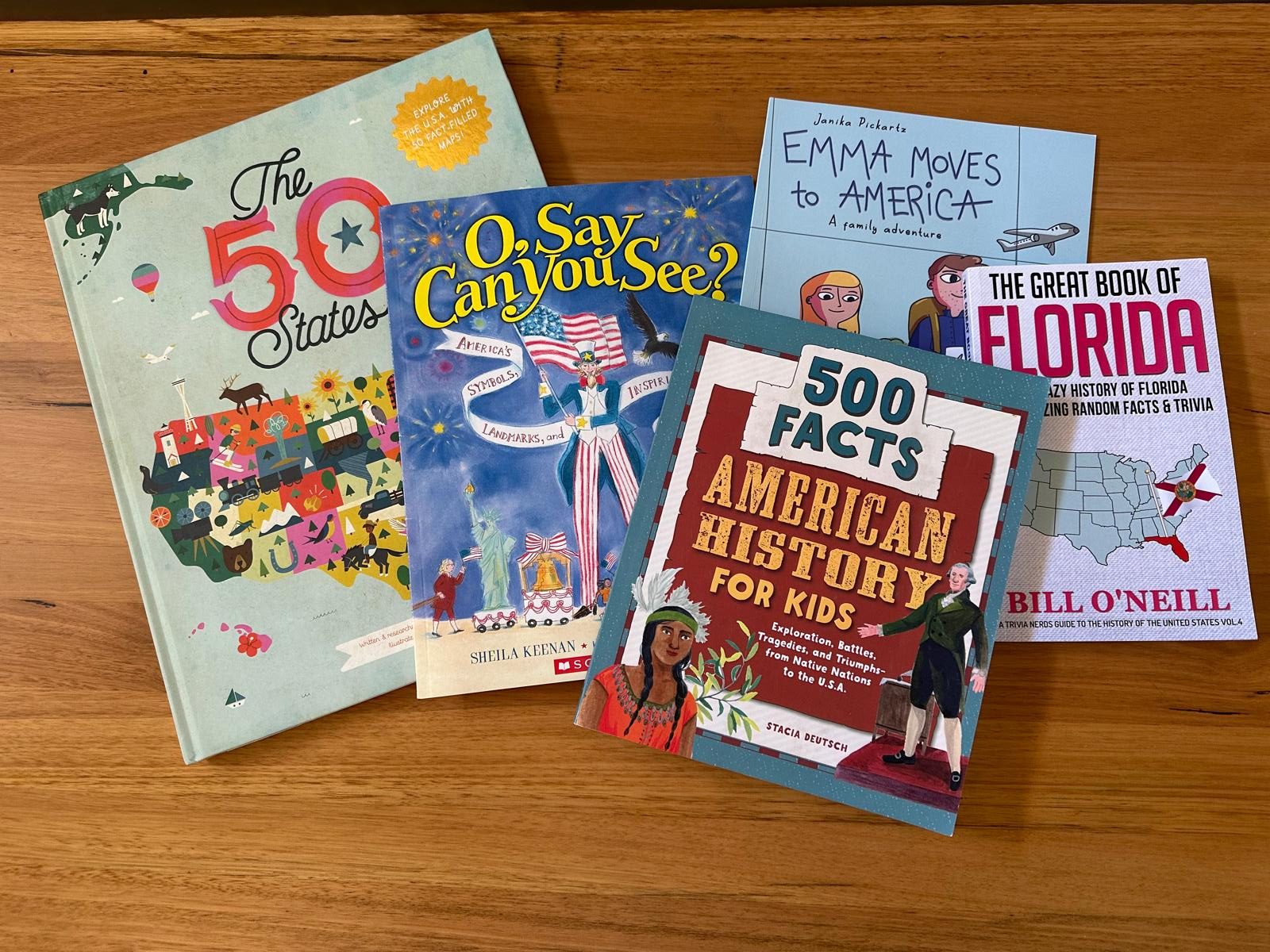
We looked at maps and found age-appropriate books about moving overseas and American culture. There are a lot of options out there and we chose some fiction stories about children moving overseas as well as non-fiction children’s books about American culture. We wanted the kids to understand that the place we were moving to would be different to what they were used to. These helped explain some of the everyday differences—like imperial vs metric measurements, new currency, and the U.S. school system (elementary, middle, and high school vs Australia’s primary and secondary schools).

We involved the kids in packing too. Since we couldn’t bring everything, we sat down and sorted through their toys and keepsakes together. Letting them help choose what came with us gave them a sense of control during a time of big change.

2. We Helped Them Say Goodbye

This heading makes it sound worse than it is. The kids knew we weren’t saying goodbye in the sense that we wouldn’t see our loved ones again, instead this was about saying farewell to the familiarity of home. We’ve been fortunate enough to go back to Australia to visit, as well as have family come to visit us. 

We made time to say proper goodbyes before we left. That meant visiting their school one last time, playing at their favorite parks, and even having goodbye ice cream at our local café.

We also created memory books filled with photos and notes from friends, hosted a small farewell party, and took lots of pictures. These moments gave our children some emotional closure and helped them start looking ahead to what was next.

This is a really difficult stage to go through for anyone, at any age. Communication is so important, as well as making sure our kids knew that we were doing this together and that they could approach us with their fears and we would be there to support them. 

Even if your move overseas is rushed and chaotic it’s still important to take time out to properly acknowledge the change that your kids are going through. 

3. We Talked About Why We Were Moving—and What We Hoped to Gain

We were honest with our kids about the fact that moving away from home, family, and friends was a big deal. But we also shared why we were excited about the move. For us, it was about having new experiences, exploring the world, and giving our children broader opportunities.

We asked them what they hoped for too. What did they want in their new room? What activities would they like to try? We also listened to their concerns, even when we didn’t have all the answers. Just having those open conversations made a difference.

What stood out the most for me was realizing that while my husband and I were looking at the move through a broader lens, our children were experiencing it very differently. We could see the long-term benefits—the chance to travel, grow as a family, and embrace new experiences—but the kids were focused on the immediate, tangible changes. While we were excited about the adventure ahead, they were wondering what their new bedroom would look like, where their school would be, and how they’d get there each day. So, we made a conscious effort to meet them where they were. We reassured them they’d have their own space in the new house, looked up their new school online together, and explained that while we didn’t have all the answers yet, we’d figure things out as we went.

4. We Kept Old Routines—and Made New Ones

We knew routine would be key in helping our kids feel secure, so we got them enrolled in school as soon as possible. Our younger two were in class within two weeks of arriving. It was a bit of a scramble, but it helped reduce the anxiety of the unknown. Rather than worrying for weeks, they just jumped in. 

We also enrolled them in sports, something familiar that helped them make friends and feel part of the community. At home, we kept up with our usual bedtime routines and family traditions, while slowly creating new ones in our new home.

The kids have loved creating new routines and traditions in our new home. We I think some of these have filled up the space that was created by the things they no lotaken the edge off not having their family around during holidays

I won’t sugarcoat it—it’s been tough. Helping our kids adjust to life in a new country has been one of the most emotionally challenging parts of the move. We’ve felt the parent guilt. But we also know that showing up, listening, and doing our best to support them day by day matters.

5. We Encouraged Them to Stay Connected to Family and Friends Back Home

Staying in touch with loved ones back home has been a lifeline. We set up regular video calls, shared photos, and encouraged our kids to write messages or send voice notes to their grandparents and friends. It helped them feel like those relationships didn’t just vanish—they were still there, just in a different way.


Final Thoughts

There’s no one-size-fits-all approach to helping children adjust after an international move, but small, intentional actions—like the ones above—can really help create a sense of safety and belonging during a time of uncertainty. 

This is just our story, and I hope sharing it helps someone else feel a little more confident, or a little less alone.

Have you moved overseas with your children? I’d love to hear what worked for you—please share your thoughts or tips in the comments!

If you found this post helpful, I’d love for you to subscribe to my blog for more tips on moving overseas with a family and traveling with kids. I share real-life experiences, practical advice, and inspiration to help make your journey a little easier. Check out my other posts to learn more!

Road Trip with the Family on a Budget: How to Plan, Pack, and Save

I’ll just say it—I love a good road trip. Give me cheesy state sign photo ops, quirky truck stops (hey there, Buc-ee’s!), and never-ending games of “I Spy,” and I’m in my happy place. My kids? They love Buc-ee’s, but being cooped up in the car for hours? Not so much. That’s why I’ve learned to plan road trips that work for all of us—fun, flexible, and most importantly, budget-friendly.

We’ve done family road trips across Australia, the UK, Europe, and now the U.S. In this post, I’ll share practical tips for planning your itinerary, saving money, packing smart, and keeping everyone happy on the road.


Why Road Trips Are Great for Families on a Budget

Here’s why I think road trips are the ultimate family vacation:

  • Cost-effective travel
  • No airport delays or baggage fees
  • No car rental needed
  • Quality family bonding time

How to Plan a Family Road Trip Itinerary

Start by answering these questions:

  • Where are we starting from, and where do we want to go?
  • How many days can we travel?
  • What’s our total budget?

Use Google Maps (or your favorite navigation app) to estimate driving time. For example, our road trip from Florida to Niagara Falls was about 19 hours each way—38 hours total.

Daily Driving Limits

If you’re traveling with kids, I recommend driving no more than 4 hours a day. You’ll need breaks for meals, sightseeing, and bathroom stops. Fatigue sneaks up quickly, especially on longer trips or unfamiliar roads.

Plot Your Route

Once you have the destination, the number of days or the budget you can make a plan. You might like to wing it but if, like me, you want to stick to a budget and a timeframe, it is worth doing the planning before you go. 

Once you know your destination and travel window, plan overnight stops along the route. Look for accommodations that:

  • Are in the direction you’re heading
  • Fall within your driving limit for the day
  • Have amenities like laundry or free breakfast (more on that later!)

For budgeting purposes I like to book accommodation ahead of time. This can be one of the most time consuming parts of planning a road trip but it’s worth checking prices and reading the review before you go. 

Plan at least one sightseeing or lunch stop per day. In bad weather, look for indoor spots like malls, trampoline parks, or indoor playgrounds.

Use a Spreadsheet to Stay Organized

A simple Google Sheet can help you:

  • Track daily stops and addresses for navigation
  • Estimate gas costs based on mileage
  • Share the plan with your kids (cutting down on “Are we there yet?” questions!). If you have time, create a binder with the itinerary and information on the places that you’re going.

Where to Stop: Get the Kids Involved

If your kids are old enough, ask them what kinds of places they’d like to visit. Mine love anything with engines, science museums, and new foods. On our Niagara Falls trip, we stopped at transport museums, space museums, quirky roadside diners, and even a lavender farm.

If your kids like sports there are some amazing sporting fields that you could tour. Maybe you could stop at a local zoo or a farm that is open to the public. We found some amazing parks on our road trips. When entering your starting location for the day you can use Google Maps to find attractions in that area. There are so many inexpensive parks and museums to explore on a road trip. 

Top stops from our trip:

  • Kinzua Sky Bridge, PA
  • Jack Daniel’s Distillery, TN (some tours are adults only so check before you go but you can also just stop and take a look around without booking a tour)
  • A giant candy store in Jacksonville, FL
  • The Henry Ford Museum in Dearborn, MI
  • Niagara Falls (viewed from the Canadian side—stunning!)

Tip: Niagara Falls is expensive. We saved by visiting midweek and staying further from the falls, using rideshare to get around because parking is limited around the falls.


Before You Go: Must-Do Prep Tips

  • Print your itinerary. Cell coverage can be patchy. Your cell/mobile carrier should have information on their website on where they do not operate.
  • Download offline maps. In Google Maps, select the areas you’ll be driving through that do not have cell coverage and download the map offline for this area. This will save you getting caught out with no cell coverage in the middle of nowhere.
  • Check for toll roads. Know if you need cash or an electronic tag. Rental cars often charge extra for unpaid tolls. Mapping apps will usually tell you where tolls are payable.
  • Research amenities. Find nearby gas stations, restrooms, grocery stores, hospitals, and attractions. Nothing sucks the fun out of a road trip faster than a frantic search for a restroom.
  • Check your insurance. Make sure you’re covered for where you’re traveling. This is not just vehicle insurance, check your medical as well to make sure you’re covered in the areas you’re traveling through.
  • Check the weather. Don’t get caught in unexpected snow (ask me how I know!). This applies not just for the destination but the route you’re taking. The weather in one town may be completely different to the town three hours away (learned this one the hard way).

Budget-Friendly Road Trip Tips

  • Book motels with free breakfast. It’s often worth a few extra dollars for the convenience.
  • Search for accommodation discounts. Does your credit card offer cashback on certain hotel chains? Are your a AAA member?
  • Buy groceries. Stock up on snacks, breakfast items, and easy meals from stores like Walmart or Costco.
  • Pack sandwiches and picnic lunches. Skip the drive-thru.
  • Use coupon sites like Groupon. Save on attractions and experiences.
  • Get a National Parks Pass. If you’re visiting more than one park, it’s worth it.
  • Download the GasBuddy app. Find the cheapest gas near you.

Smart Packing Tips for Families

  • Pack light and do laundry. Book accommodations with washers/dryers every 4–5 days.
  • Bring a cooler. Use ziplock bags with ice (most motels will have an ice machine) to keep food and drinks cold.
  • Multi-use items: Beach towels double as picnic blankets or car spill catchers.
  • Kitchen basics: Bring bowls, plates, utensils, cups, paper towels, a chopping board, and containers for snacks.

How to Keep the Kids Entertained (Without Screens)

  • Let each kid be DJ for an hour. They pick the playlist.
  • Talk! Road trips are great for real conversations.
  • Visit Target or the dollar store pre-trip. Grab coloring books, card games, and travel games.
  • Play classic games: “I Spy,” license plate bingo, “20 Questions.”
  • Break up long drives. Stop every 90 minutes or so to stretch, snack, and explore something fun.

Final Thoughts

Family road trips can be some of the most memorable—and affordable—vacations you’ll ever take. With a little planning, a flexible attitude, and a good playlist, you’ll be all set for the ride.

Have questions or favorite family road trip memories? Drop them in the comments—I’d love to hear from you!

If you want to see more of my travel adventures follow me on Instagram @bright_sky_vacations.

Moving Your Family from Australia to the USA: A Comprehensive Guide

This is a long one. There are so many aspects to moving to a new country. With so much to do  it can feel overwhelming. I felt the pressure to make sure I had every loose end tied up because when you’re moving over 9000 miles away and it takes over 20 hours to travel between Sydney and Tampa, you really don’t want to forget anything. 

In 2023, my husband, three sons, and I moved from Sydney, Australia, to Tampa, USA. From opening bank accounts to securing housing and enrolling in school, we navigated the complexities of setting up our new life in the United States. I’m writing about my experience in the hopes that this might be helpful for other families moving to the USA. There is so much to cover on these topics so I’ll try to summarize. 

1. Navigating U.S. Visas and Entry Requirements

An immigration lawyer arranged our visas on our behalf. They were able to file paperwork and arrange an interview with the US Consulate in Sydney. We required Australian passports, letters from my husband’s employer and other documents that supported our visa application. The interview itself did not take very long and our children did not need to attend but it was still important to be prepared to answer any number of questions about our plans in the USA, as well as personal questions about our relationship. 

Tip: If your passport is nearing expiration, renew it before initiating the visa process. An expired passport requires you to carry both the old (with the visa) and new passports when traveling.​

The most common pathways include employer-sponsored visas (such as the E-3 visa for Australians), family-based visas, or investor visas. If you are planning on moving to the USA from Australia for a limited time (i.e. you don’t not intend to live there indefinitely), the E3 might be your best option. 

For me, as the trailing spouse, the E3s visa allows me to live and work anywhere in the USA with any employer (or start my own business!). The drawback to this visa though is that dependent children are not able to work in the USA. This becomes a challenge when the kids are in their teens and are wanting to start working and earning their own money. 

Occasionally, upon re-entry to the U.S., my I-94 form incorrectly listed me as a dependent rather than a spouse, affecting my work authorization. Always check your I-94 status online after entry. Corrections can typically be made by submitting a form via email to the I-94 office and are usually resolved within a couple of days.​

2. Packing Up and Shipping

We hired a removal company to pack and ship our belongings over two days. Since our move wasn’t permanent, we rented out our Australian home and stored some items on-site with tenant agreement, saving on storage fees.​

Shipping, including insurance, was expensive and slow. In hindsight, selling our furniture and purchasing new items in the U.S. might have been more cost-effective. Unless you have irreplaceable items, consider researching costs before deciding to ship.​ Research the cost of replacing furniture versus the cost of shipping.

Tip: Clean all items thoroughly before shipping to prevent mold growth during transit. Avoid packing food or liquids, and pack lithium batteries separately. To maximize space, ask movers if you can fill drawers and cupboards with linens or clothing, ensuring the weight remains manageable.​

Our shipment took six months to arrive in Florida. During that time, we furnished our home, resulting in duplicate items. For bulky items like children’s bikes, consider purchasing locally through platforms like Facebook Marketplace or Walmart.​

We categorized our belongings into three groups:​

  1. Sell or dispose​
  2. Ship to the USA​
  3. Store in Australia​

Paying for extra baggage on your flight is often cheaper than international postage. Stock up on favorite Australian products like Vegemite and Weet-Bix before departure, as they’re pricier in the U.S., though available on Amazon.​

Our pre-move checklist included:

  • Redirecting mail​
  • Canceling utilities and insurance​
  • Terminating unnecessary subscriptions​
  • Closing or consolidating bank and credit accounts​
  • Hiring a property manager​
  • Downloading health and vaccination records​
  • Notifying banks and tax agents of our move​
  • Informing our children’s schools​

My husband relocated first, and the children and I followed weeks later. He worked with a relocation expert to assist with settling in. If you’re unfamiliar with your new area, such experts can be invaluable.​

3. Setting Up Banking and Credit

Ok, so now we’re in our new country and we have to set up our lives here, including bank accounts. One of the biggest hurdles once arriving in the USA is establishing financial credibility. Here’s how we navigated it:

  • Opening a Bank Account: We chose a major national bank (Bank of America, and Advantial are good options). Requirements included passports, proof of address in the USA, and visa details. It can take several phone calls and a number of forms to make this happen. Finding a bank that is willing to give a credit card to a foreigner took a little longer. I find transferring funds between banks cumbersome. Other payment options such as Venmo and Zelle which allow for the immediate transfer of funds are more efficient. PayPal is also used here but you will need to close your existing PayPal account and open a US account. 
  • Building a Credit Score: Without a USA credit score, it can be difficult to get approved for credit cards, loans, or rental applications. We secured a credit card and used it strategically to establish our creditworthiness. Putting utilities in both mine and my husband’s names was a way for both of us to establish credit. We took out small loans for cars and made sure to make the payments on time to further improve our credit rating. It took a few months for my husband and almost twelve months for me to obtain a credit score. You may set up an account on Experian to view your credit score. 

Given the time it can take to set up a bank account in the USA, it is worth bringing a credit card or direct debit card that is accepted internationally with you. My favorite at the moment is WISE (not sponsored, obviously) because you can hold money in multiple currencies on one card. 

4. Obtaining a Social Security Number (SSN)

A Social Security Number (SSN) is essential for employment, banking, and credit applications. After arriving, we visited the local Social Security Administration (SSA) office with our passports, I94, and completed SSN applications. Basically, you take a number and wait your turn. Make sure your phone is charged and take snacks. 

I had my application denied the first time because I didn’t have a certificate stating that I wouldn’t claim social security benefits. I was told to go to another office to obtain the certificate and come back. When I did, I was informed that no such certificate existed. I returned to the SSA and, eventually, I got my SSN. I share this to highlight that sometimes things don’t go as smoothly as they should. Be patient, stay calm, and don’t give up. Be polite but assertive. Not every office will be familiar with your visa type or your circumstances, so you may need to gently advocate for yourself along the way.

 It took about two weeks for my SSN card to arrive. Just make sure again that your printed I94 indicates that you have approval to work because your SSN card will state whether you have permission to work. 

Tip: Call your local SSA office in advance to confirm what documents you need for your visa type.

5. Finding a Home to Rent

There are a few real estate websites (like Zillow and Realtor). My husband and I went through some listings before we left Australia to get an idea of prices. We determined our area based on school zones and then worked with our budget to see the types of property we could afford. Since he went over before me, he went to open homes of the properties that we both liked on Zillow and secured a property shortly before the kids and I arrived. 

Finding a rental home in the USA without a credit history or rental history can be challenging. Here’s how we tackled it:

  • Choosing a Neighborhood: Before we moved we researched Tampa neighborhoods based on school scores, amenities, and commute times. 
  • Providing Alternative Proof of Income: Since we lacked a U.S. credit score, we provided proof of Australian income, job contracts, and an upfront deposit (be prepared to pay up to four months rent in advance as a deposit if you’re a foreigner).
  • Using Rental Agents: Real estate agents helped us navigate the rental market and negotiate lease terms. We used an excellent realtor who had knowledge of which property management companies would lease to foreigners/people without credit and who would not. We were fortunate to find a house on Zillow that was managed by the owner who was willing to lease to us. 
  • Compromise: If you don’t have the luxury of time to wait for the ideal property to come on the market, consider a short term lease on a property in the area you want to live in. This is particularly important if you have school aged children that you need to enrol into public schools. 

7. Getting a U.S. Driver’s License

Having access to a car and being able to drive is almost a necessity in most rural or suburban areas. There is no public transport in the area where we live and it would take about an hour to walk to the nearest shop. A driver’s license is also a useful form of identification. 

When we first arrived I drove using my Australian issued driver’s license. You can only use your foreign driver’s license or international drivers license for 30 days after establishing residency in Florida. This means that from the time you start working in Florida or enrol your kids in school you have 30 days to obtain a Florida drivers license. There may be exceptions to this so it’s worth checking with your local county.  

Driving in the U.S. requires a state-issued driver’s license. Each state has different requirements but to obtain a driver’s license in Florida I needed to:

  • Pass a vision test and road rules knowledge test 
  • Pass a driving skills test. 
  • Provide proof of residential address (e.g. rental agreement), SSN, and immigration documents.

It’s worth noting that the expiry on your driver’s license will likely match the expiry date on your visa. I have spoken to other expats and their experiences vary but my driver’s license expires around the time my visa does. 

8. Enrolling Children in School

Enrolling our kids in school was a priority. The U.S. school year differs from Australia’s, so planning ahead is key. In Florida the school year runs from early August until the end of May. 

I won’t sugarcoat it, schooling is serious business and there are a lot of different options for schooling and you need to work out which option will suit your situation and your child. There are books on this topic, and even professionals who provide an advisory service to help you navigate the school system. I might do a separate blog post on this because if you have school aged children it is worth understanding your options and the process before you move to make the transition easier once you arrive.

  • We researched local public schools based on zoning and performance rankings. Florida has public, magnet, charter and private school options. Our county has a virtual school program too if you want to homeschool your child (this can be done part or full time). It’s worth reaching out to your preferred school before you move. If you don’t know which school you are zoned for you can contact the county that you’re moving to. The admissions department should be able to explain the enrolment process, including forms and required information. 
  • Public schools are free (even for foreigners like us). We have been happy with our A rated public school. If you are an international family that moves frequently it may be worth finding schools that offer an international baccalaureate program (IB). In Florida there are several public and private schools that offer this program. The public schools accept enrolments for IB at certain times of the year and sometimes it’s a lottery system so there’s no guarantee of acceptance. 
  • Schools require proof of residency, immunization records (converted to U.S. standards), birth certificates, and previous school reports for enrollment.
  • In Florida we needed to provide a physical examination certificate along with immunization records. To obtain this we attended a local walk in clinic (like a medical centre) for the physical. We attended the health department in our local county to get our Australian immunization records recognized in Florida. 

9. Health Insurance and Medical Setup

I’m sure we have all heard stories about how expensive healthcare in the USA is, especially compared to countries with universal healthcare. Private healthcare is a necessity for a family moving to the USA. Some employers may offer full or discounted healthcare insurance as part of an employment package. 

Some (ok a lot) thoughts on health insurance:

  • We chose the employer-sponsored health plan offered by my husband’s employer because this was the best option for us. You can of course research other health insurance providers. Note that certain providers only operate in some states so you’ll need to find the insurers in the state you are moving to. Insurers will have an online survey that you can fill out to determine what coverage is best for your family. 
  • Much like Australia, you will find your private health insurer will cover some of your medical bill and you will be expected to pay ‘the gap’. I have found it surprisingly difficult to get a quote for medical costs before treatment. It’s frustrating to say the least. Some places will tell you what your out of pocket costs will be but others will be vague on costs (avoid these places if you can). 
  • Our health insurance and our dental and eye insurance are separate insurances. To make sure we had medical coverage as soon as possible, we set this up before we moved and I think it commenced within the first month. Since my husband went over first we arranged travel insurance for him for the first month that he was in the USA until it was clear that our health insurance had commenced. Once the kids and I arrived we had full medical and dental in place. 
  • Finding a Family Doctor: download the insurers app once you’ve signed up. Use this app to find healthcare professionals in your area that accept your insurance. Find the hospital and the paediatric hospital (if you have children) in your area that is covered by your insurance. Not all hospitals will accept your insurance and it can make for a very costly mistake if you go to the wrong hospital. 
  • I would say, generally speaking, my experience so far has been that the cost for doctor visits and specialist visits has been comparable to Australian doctors that do not bulk bill.
  • Always ask for an itemized bill from the hospital you attend to check that you are only paying for the services that you received. You will likely discover that you will receive multiple bills for medical treatment. I found this confusing at first because I thought I had paid the bill only to then receive another one.

10. Final Thoughts

Moving from Australia to the U.S. was a massive transition for our family, but it’s been an incredible adventure. The key to a smoother move is planning ahead, staying flexible, and embracing the journey—even when things don’t go to plan.

Whether you’re relocating for work, family, or a fresh start, I hope this guide helps you feel more confident and prepared.

If you’ve made the move (or are planning to), I’d love to hear from you! Drop a comment below or connect with me on Instagram at @bright_sky_vacations. And if you need help planning your move or future travels, I’d be happy to help.

Moving from Australia to the USA: Our Journey

Note: This is more of an overview of how we moved from Australia to the United States of America. There is quite a lot to do when moving to a new country! The US and Australia are both English speaking countries, and whilst speaking the same language makes most things easier to navigate, there are a lot of cultural differences to learn and understand. Additionally, government forms and processes to set up our identities and bank accounts are different to those in Australia. Being a foreigner with no credit or rental history is a challenge in the US. I’ll address this in my next blog post with practical tips around navigating the process of moving overseas, and provide a more detailed explanation of the steps required. 

Do we stay or do we go?

I can still remember sitting on the sofa one evening with my husband when he casually mentioned a job opening in the US. We had a little laugh and a brief chat as we imagined what our lives might look like in a different country. I don’t think I realized it then, but this chat planted a seed of “what if.”

Over the next few weeks, that seed sprouted and grew as we realized that this opportunity was very real and available to us. Once we had crossed the hurdles around finances and logistics, it became an emotional decision for us and the kids. We needed to decide if living on the other side of the world from our family and friends was worth the adventure. Spoiler: we decided it was!

Eight weeks(!)

The countdown began: we had eight weeks to pack up our lives and move to the other side of the world. More importantly, eight weeks to prepare ourselves and our children for the reality of living far from familiar faces and places. We talked openly with them about the changes ahead, balancing excitement with the acknowledgment that goodbyes would be hard. My husband left after eight weeks, and we decided that the kids and I would follow three weeks later.

The first step was arranging a visa. An immigration lawyer handled the process on our behalf and organized our interview with the US consulate. Next was getting removal quotes and arranging storage. Our move to the US was never intended to be permanent, so we decided to rent out our home in Sydney and store some of our belongings. We packed enough to fill a shipping container that would be shipped to our new home, while the rest was stored or disposed of. We sold our cars, withdrew our kids from school, bought airplane tickets, and threw a farewell party.

Once the basics of departure were sorted, we focused on arriving in the US. I lay awake at night researching school curriculum, healthcare options, how to get a driver’s license, and so on. Suffice to say, I didn’t get a lot of sleep during those two months but I’m glad I did this research before we moved because it took a lot of the pressure off once we arrived.

A Nervous Wait: Preparing for the Big Move

My husband went ahead first. He needed to start his new job and find us a home before the kids and I arrived. The kids and I stayed with my parents for a few weeks while I finished up my job and they wrapped up school. It was a nervous waiting game until our turn came. My husband worked with a relocation expert in Tampa, Florida, to find a house, get a social security number, and complete all the other mundane tasks required to establish oneself in a new country. To his credit, when he picked us up from the airport three weeks later, he’d not only found a home, but he’d also bought a car and set up utilities and bank accounts—all while starting a new job.

As my departure date drew closer, I started focusing on the small details of our move (probably as a distraction from the larger challenges). I ordered food and laundry items for our new home, connecting to a US VPN to make online shopping easier. I selected new linen, a coffee machine, and a few home comforts, having everything sent ahead to our new address. These small tasks made arriving in a new country after 20 hours of travel feel a little less overwhelming.

In an attempt to prepare myself, I did what any elder millennial does—I googled “moving from Australia to the USA.” I also searched Facebook groups to find others who had embarked on a similar journey. It was through this research that I discovered the term “trailing spouse.” I learned that I was about to become one: someone who leaves their home for the sole reason of following their partner, usually due to the partner’s career.

The stories I read painted a bleak picture. Trailing spouses often give up their own careers, face challenges in finding work where their qualifications may not be recognized, and shoulder much of the responsibility for setting up a new life. I felt daunted by this information. Was I making a mistake? Would I lose myself in the process?

Over a year on from first reading those articles, I can confirm that much of it is true—but it’s not the whole picture. Along with the challenges came the discovery of strengths and skills I didn’t know I had. The self-confidence that comes from facing and overcoming hurdles is something I never anticipated. Yes, I miss my family, friends, and the familiarity of my Australian home. But I’ve also experienced the joy of meeting new friends, exploring a new country, and redefining my own identity. Without getting too philosophical, I feel like my approach to middle age is not set against the backdrop of comfortable and mundane but rather something invigorating, unexpected, and exciting. I’m choosing to embrace the change and be resilient.

Touchdown: Our New Beginning

The first few months in the US were a blur of new experiences. I’ll never forget the feeling of stepping off that plane, exhausted yet buzzing with anticipation. Seeing our new house for the first time, driving on the opposite side of the road—it was all part of the adjustment.

Sharing new experiences has helped to bring our family closer together. We laugh and cheer at the wins, as well as share our fears and frustrations about the unknown. We do more together as a family and communicate better with each other as we try to support each other on this new journey. We’re taking each day as it comes and feel privileged to be able to live in a different country. 

Are you thinking of making the move to the US? What are you looking forward to most about moving?

Embracing a New Life: My Journey from Sydney to Tampa

Hi! I’m Deb, an Australian woman who now lives in the USA – having travelled here from Sydney in 2023. I’m currently living and loving my new life with my husband and our three kids in Tampa, Florida. With fresh eyes and an open heart, I am embracing all that this country has to offer.

Moving overseas was one of the biggest decisions our family has ever made. It wasn’t just about packing up our belongings and hopping on a plane—it was about stepping into the unknown, leaving behind the familiar, and starting fresh in a new country. Whilst the transition wasn’t always easy, it was exactly what I needed. This change has helped me refocus my life, rediscover my passions, and open myself up to new experiences.

One of the things I love most about our new life is the sense of adventure that comes with it. Every day brings something new to explore, whether it’s found in our local Tampa neighborhood, a weekend getaway to another part of Florida, or a family road trip to experience more of the USA and beyond. We’ve made it our mission to say “yes” to new opportunities, to immerse ourselves in the culture, and to create lasting memories as we navigate this chapter together.

Making the move to a new country comes with its challenges. From setting up a new home and understanding a different school system, to figuring out how to build a credit history from scratch – there were plenty of hurdles to overcome. But with each challenge, we’ve learned, adapted, and grown stronger as a family.

For anyone considering a big move or even just a change in their life, my biggest advice is to embrace the unknown. Growth happens when we step outside of our comfort zones. The past year has taught me that life is meant to be lived fully, with curiosity, courage, and an open heart.

I can’t wait to share more about my journey, my travel experiences, and the lessons I’ve learned along the way. Whether you’re looking for tips on relocating, inspiration for your next trip, or just a glimpse into life as an Aussie expat in the USA, I hope you’ll join me on this adventure!